

War, nationalism and the new Swadeshi moment
From Hegel to geopolitics, global conflict is reshaping India’s economic priorities and strategic thinking
War, nationalism and the new Swadeshi moment

While preparing for the Civil Services Examination in 1967, I relied substantially on a remarkable book by Professor C.L. Wayper, Teach Yourself Political Thought, published by the English Language Book Society (ELBS). This British initiative, in collaboration with the British Council, produced low-cost editions of academic textbooks for students in developing nations.
The book proved invaluable. Political thought became the subject that largely carried me through the examination, even though I performed reasonably well in the English essay paper and rather poorly in my chosen and favourite subject of mathematics.
I particularly recall the author’s provocative observation on the role of external aggression in fostering national unity. He paraphrased the famous dictum of Lord Acton—“Power tends to corrupt, and absolute power corrupts absolutely”—into a striking variation: “Peace tends to corrupt, and absolute peace corrupts absolutely.”
The argument suggests that as authority expands unchecked, moral sense declines, often leading to tyranny, ethical decay, and abuse, as history has repeatedly demonstrated.
This line of thinking resonates with the controversial view of the German philosopher Georg Wilhelm Friedrich Hegel. Hegel did not regard war as merely an evil, but as a necessary, even ethical, phenomenon that strengthens national unity and prevents societal stagnation.
In his view, prolonged peace encourages excessive focus on individual interests and material comfort, weakening the collective spirit. War, as a disruptive force, compels individuals to recognize their connection to the state and the larger community.
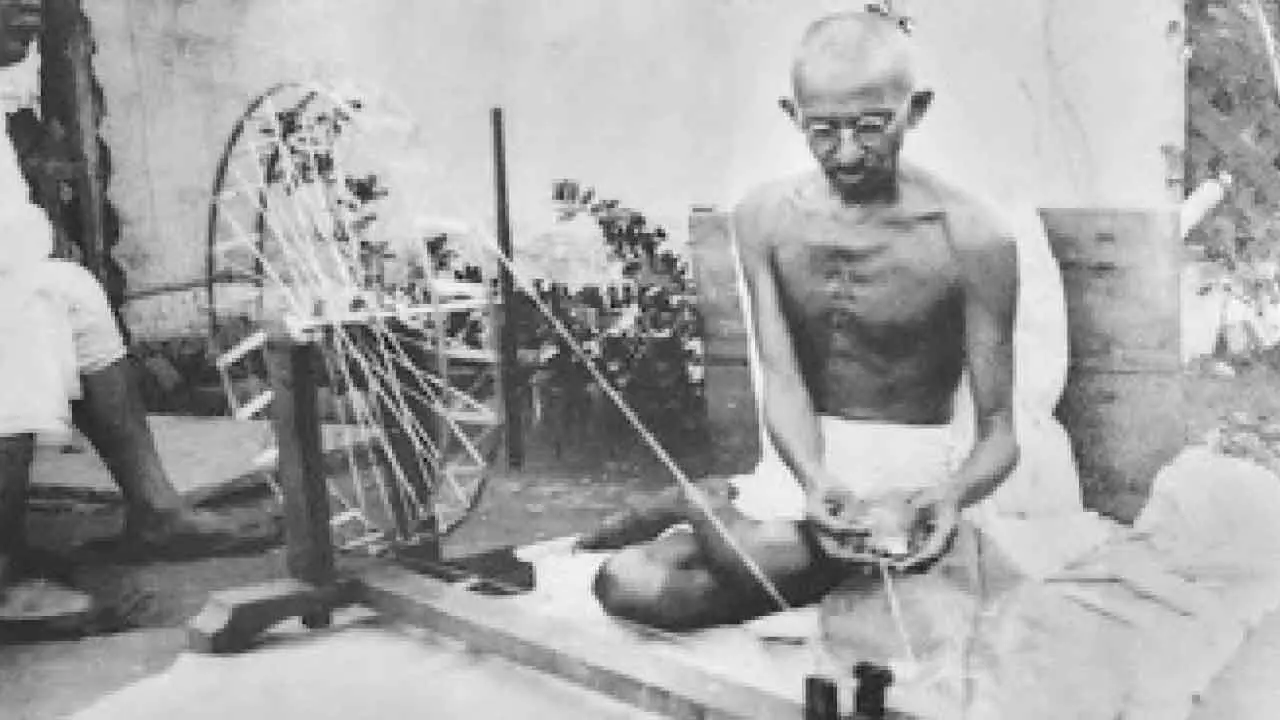
History offers parallels. The oppressive imperial rule of the British in India gave rise to the ‘Quit India’ movement and Mahatma Gandhi’s clarion call for Swadeshi goods. Today, a somewhat similar sentiment appears to be re-emerging. The ongoing conflict in the Middle East, coupled with strained relations with the United States, has revived calls within India for greater reliance on Indian goods.
Amid geopolitical uncertainty and supply chain disruptions, industry leaders have increasingly advocated support for Indian goods, a sentiment strongly echoed by the government. Union Minister for Information Technology Ashwini Vaishnaw has reportedly shifted to domestic software solutions from Zoho, moving away from platforms offered by global giants such as Google, WhatsApp, and Microsoft.
Other ministers have followed suit. In a recent presentation on highway projects, a minister notably used a Zoho product instead of Microsoft PowerPoint and relied on a Swadeshi mapping platform rather than Google Maps, announcing this with visible pride. In a widely viewed post on X, he urged citizens to embrace indigenous products.
While this spirit is commendable, the issue is far from straightforward. American and other global brands are deeply entrenched in the Indian market.
Domestic companies often struggle to match the financial muscle, technological scale, and global reach of their American and other international counterparts. As a leading Indian public relations executive has observed, state patronage alone is no longer sufficient in the current environment.
Nevertheless, prioritizing ‘Made in India’ products remains crucial for building a self-reliant and resilient economy. Supporting domestic manufacturing is not merely an act of patriotism; it is a strategic necessity that generates employment, strengthens supply chains, and reduces dependence on imports.
Consumer choices can have meaningful local and global impacts. Encouragingly, many Indian manufacturers are increasingly adopting sustainable practices, adding an environmental dimension to economic self-reliance.
And the icing on the cake has come in the form of the new ‘Economic Stabilisation Fund’, to provide fiscal space amid global instability, announced by Union Finance Minister NirmalaSitaraman, yesterday in the Lok Sabha.
Economic crises drive citizens to seek economic nationalism, or a sense of patriotism fuelled by nationalist, protectionist, and anti-globalist sentiments, a search for identity and security through solidarity. They have historically made states prioritize domestic industries and workers over international trade.
Historical examples include the rise of fascism during the 1930s, depression, a severe global economic downturn from 1929 to 1939 characterized by high rates of unemployment and poverty, drastic reductions in industrial production and international trade, and widespread bank and business failures around the world.
And the “Buy American” sentiment, which focused on supporting domestic economic development and employment, dating back to the ‘Buy American Act’ signed by President Herbert Hoover in 1933. Likewise, the widespread unemployment and hyperinflation in Germany, which occurred from mid-1922 to November 1923, following Germany’s failure to pay war reparations, spurred extreme nationalism as populations sought stability and scapegoats.
Similarly, the 2008 worldwide financial crisis, centred in the United States, resulted in scepticism of global markets, leading to the UK’s Brexit. In the present context, India faces several immediate challenges. These include the absence of strategic LPG reserves, overdependence on a single region for imports, and the vulnerability of maritime trade routes.
Short-term responses, such as boosting domestic production, rationing demand, and arranging emergency supplies, are already underway. However, long-term solutions must include building strategic reserves, strengthening naval protocols for energy security, and diversifying supply sources beyond the Gulf region.
India’s stakes in the Middle East extend beyond energy. Millions of Indians live and work in Gulf countries, and the region remains a key market for Indian exports. At the same time, India has historically maintained balanced relations with the United States, Israel, and Iran. Sustaining this delicate diplomatic equilibrium is becoming increasingly difficult amid rising tensions.
Complicating matters further is the potential disruption of the I2U2 grouping, comprising India, Israel, the United Arab Emirates, and the United States. This partnership has been instrumental in advancing cooperation in areas such as energy, water, transport, space, health, and food security. Any instability could undermine these collaborative efforts.
The situation also raises humanitarian and logistical concerns. The situation posed other challenges for India, such as the logistics called for in the humanitarian task of evacuating 1,70,000 citizens from Kuwait and Iraq,creating intense diplomatic pressures. The safety of over 9 million Indians living in the Gulf region and the chances of job losses affecting close to $50 billion in annual remittances to India are also matters demanding urgent and serious attention.
Additonally, the neglect which the country has been guilty of, in not building up an adequately large fleet of SSNs (Nuclear Submersible Ships) and delaying induction of drones, can limit the country's options.
India is therefore observing developments in the Gulf with more than routine geopolitical interest. The conflict has, in many ways, reached its doorstep. While New Delhi has called for restraint and de-escalation, it continues to monitor the developments closely.
In such uncertain times, one is reminded of the evocative lines of the great Urdu poet Mir Taqi Mir: Ibtida-e-ishq hai rota hai kya Aage aage dekhiye hota hai kya
This is but the beginning, so hold your feelings . One must wait and watch what unfolds next.
(The writer was formerly Chief Secretary, Government of Andhra Pradesh)





